Stocks
Equity research, earnings, sector moves, and the company news that drives share prices.
83+ Stock Market Guides · Updated August 2026
What Are Stocks?
A stock is a share of ownership in a company. Buying one makes you a part-owner of that business, with a claim on its future profits and, in many cases, a vote on how it's run.
Why People Invest in Stocks
Stocks have historically offered some of the strongest long-run returns of any widely available asset class, making them a core building block for retirement savings, education funds, and long-term wealth building.
How Stocks Work
Shares trade on exchanges like the NYSE and Nasdaq, where prices move constantly based on supply, demand, company performance, and the broader economy. You can buy or sell through a brokerage account, typically in seconds.
Benefits and Risks
Stocks can appreciate in price and pay dividends, but their value can also fall sharply and quickly. Diversification, time horizon, and risk tolerance all shape how much of a portfolio belongs in individual stocks versus funds.
Featured Beginner Guide
Risk Management for Stock Investors
Explore Stocks
Popular This Week
Learn Stock Investing
Explore Stocks
Stock Market Trading Hours Explained
U.S. stock markets run on a set daily schedule, with regular trading hours, extended pre-market and after-hours sessions, and meaningfully different liquidity and risk in each.
By Deepak Kuldeep · August 6, 2026
Dividend Yield Explained
Dividend yield measures a stock's annual dividend payment as a percentage of its share price — a quick income comparison tool that can also hide risk when a yield looks unusually high.
By Deepak Kuldeep · August 6, 2026
Trading Volume Analysis Explained
Trading volume — the number of shares changing hands — helps confirm or question a price move. Combined with price action, volume analysis is one of the core tools of technical analysis.
By Allen Krewzz · August 6, 2026
Beta Explained: Measuring a Stock's Volatility
Beta measures how much a stock's price tends to move relative to the overall market — a widely used, if imperfect, gauge of relative volatility and risk.
By Allen Krewzz · August 6, 2026
Return on Assets (ROA) Explained
Return on assets measures how efficiently a company turns what it owns into profit — net income divided by total assets — and is most useful when compared within the same industry.
By Deepak Kuldeep · August 6, 2026
Treasury Shares: What They Are and How They Work
Treasury shares are stock a company has repurchased and holds itself rather than keeping in public circulation — reducing outstanding shares without retiring them entirely.
By Deepak Kuldeep · August 6, 2026

Floating Shares: What They Are and How They Work
A company's float is the portion of its outstanding shares actually available for public trading — excluding insider holdings, restricted stock, and shares the company itself owns.
By Deepak Kuldeep · August 6, 2026
International Stocks Explained
International stocks are shares in companies based outside your home country — a way to diversify beyond a single economy, with added considerations like currency risk and differing market regulations.
By Allen Krewzz · August 6, 2026
Large-Cap Stocks Explained
Large-cap stocks are shares in companies typically worth $10 billion or more — established, heavily-traded businesses that anchor most major indexes and most diversified portfolios.
By Deepak Kuldeep · August 6, 2026
Mid-Cap Stocks Explained
Mid-cap stocks — roughly $2 billion to $10 billion in market value — sit between small and large caps, often described as a middle ground between growth potential and financial stability.
By Allen Krewzz · August 6, 2026
Small-Cap Stocks Explained
Small-cap stocks are shares in companies typically worth $300 million to $2 billion — smaller, less-followed businesses that offer higher growth potential alongside meaningfully higher risk and volatility.
By Allen Krewzz · August 6, 2026
Risk Management for Stock Investors
Risk management in stock investing isn't about eliminating losses — it's a set of practical habits that keep any single mistake from derailing your overall plan.
By Deepak Kuldeep · July 16, 2026
Outstanding Shares: Definition and How to Calculate
Outstanding shares are all the shares a company has issued and that are currently held by shareholders, including insiders — the figure used to calculate market capitalization and earnings per share.
By Deepak Kuldeep · July 16, 2026

Contrarian Investing Strategy Explained
A contrarian investing strategy deliberately buys stocks the crowd has given up on and sells or avoids whatever everyone else is currently excited about.
By Allen Krewzz · July 16, 2026
Bollinger Bands Explained
Bollinger Bands wrap a moving average in two bands that widen and narrow with volatility, giving a visual read on how stretched a price move has become.
By Tamanna Shaikh · July 16, 2026

What Is an Order Book?
An order book is the live, constantly updating list of pending buy and sell orders for a stock, organized by price — it's the raw data behind every quote you see.
By Deepak Kuldeep · July 16, 2026
What Is a Shareholder?
A shareholder is any individual or institution that owns at least one share of a company's stock, giving them a legal claim on its earnings and, often, a vote.
By Allen Krewzz · July 16, 2026
Return on Equity (ROE) Explained
Return on equity measures how efficiently a company turns shareholders' invested capital into profit, calculated by dividing net income by shareholders' equity.
By Deepak Kuldeep · July 16, 2026

Portfolio Allocation Basics
Portfolio allocation is the decision that matters more than any individual stock pick — how you split money across stocks, bonds, and cash based on your timeline and risk tolerance.
By Deepak Kuldeep · July 16, 2026
MACD Explained
MACD tracks the changing distance between two moving averages to gauge momentum shifts — one of the most widely used indicators in technical analysis.
By Tamanna Shaikh · July 16, 2026
Defensive Stocks Explained
Defensive stocks belong to companies selling things people need regardless of the economy — utilities, groceries, medicine — which makes their earnings unusually steady through recessions.
By Allen Krewzz · July 16, 2026
Active Investing Explained
Active investing means researching and selecting individual securities in an ongoing attempt to outperform the broader market rather than simply match it.
By Tamanna Shaikh · July 16, 2026
Shareholder Voting Rights Explained
Owning common stock typically grants voting rights on major corporate decisions, exercised at annual meetings or through mailed and electronic proxy ballots.
By Deepak Kuldeep · July 16, 2026
Relative Strength Index (RSI) Explained
The Relative Strength Index gauges how fast and how far a stock has moved recently, flagging conditions traders commonly call overbought or oversold.
By Deepak Kuldeep · July 16, 2026
Passive Investing Explained
Passive investing means minimizing decisions and trading, leaning on broad, low-cost funds to capture market returns instead of trying to outguess where prices go next.
By Allen Krewzz · July 16, 2026
Free Cash Flow (FCF) Explained
Free cash flow is the actual cash a company generates after running the business and paying for equipment and property — money genuinely free to return to shareholders or reinvest.
By Tamanna Shaikh · July 16, 2026
Cyclical Stocks Explained
Cyclical stocks rise and fall alongside the broader economy — thriving when consumers and businesses are spending freely, and struggling when they pull back.
By Deepak Kuldeep · July 16, 2026
Bid vs Ask Price Explained
The bid is the highest price a buyer will pay, the ask is the lowest price a seller will accept, and the gap between them — the spread — quietly affects every trade.
By Allen Krewzz · July 16, 2026

Supply and Demand in the Stock Market
Every stock price move ultimately traces back to supply and demand — how many shares are available to trade against how eager buyers and sellers are to trade them.
By Deepak Kuldeep · July 16, 2026
Public vs Private Companies: Key Differences
Public companies sell shares to anyone through a stock exchange and must disclose detailed financials; private companies keep ownership closely held and their books largely confidential.
By Deepak Kuldeep · July 16, 2026
Net Income Explained
Net income is what remains of a company's revenue after every expense, interest payment, and tax bill is subtracted — the figure investors call the 'bottom line.'
By Allen Krewzz · July 16, 2026
Moving Averages Explained
A moving average smooths daily price noise into a single trend line, and its crossovers are among the most widely watched signals in technical analysis.
By Tamanna Shaikh · July 16, 2026
Meme Stocks Explained
Meme stocks surge and crash based on social media attention and coordinated retail trading rather than business fundamentals — the GameStop rally of 2021 turned the phenomenon into a household term.
By Tamanna Shaikh · July 16, 2026
Index Investing Strategy Explained
An index investing strategy means buying a fund that simply tracks a market benchmark, owning hundreds of companies at once instead of trying to pick individual winners.
By Tamanna Shaikh · July 16, 2026

Trend Lines Explained
A trend line connects a stock's swing highs or lows to visualize direction — simple to draw, easy to draw badly, and never a guarantee of what comes next.
By Allen Krewzz · July 16, 2026
Stock Certificates: What They Are (And Do You Still Need One)
A stock certificate is a paper document proving share ownership. Almost all modern trading skips paper entirely, using electronic book-entry records instead.
By Deepak Kuldeep · July 16, 2026
Revenue: What It Means for a Public Company
Revenue is the total amount of money a company brings in from selling its products or services, before any expenses are subtracted — the starting line of the income statement.
By Allen Krewzz · July 16, 2026
Penny Stocks Explained: Risks and Realities
Penny stocks trade at very low share prices, often outside major exchanges, and combine thin regulation with heavy manipulation risk — a low price tag doesn't mean low risk.
By Allen Krewzz · July 16, 2026

Momentum Investing Strategy Explained
A momentum investing strategy buys stocks that are already trending upward and sells those trending downward, betting that recent price direction tends to persist for a while.
By Tamanna Shaikh · July 16, 2026
Long-Term Investing: Why Patience Pays Off
Long-term investing isn't a passive default — it's a deliberate strategy that lets compounding and business growth do the work that timing rarely can.
By Tamanna Shaikh · July 16, 2026

How and Why Stock Prices Change
Stock prices change because buyers and sellers continuously renegotiate a price based on new information, expectations, and how badly each side wants to trade.
By Deepak Kuldeep · July 16, 2026
Support and Resistance Explained
Support and resistance are price levels where a stock has repeatedly stalled or reversed — useful reference points, though far from guaranteed to hold.
By Allen Krewzz · July 16, 2026
NASDAQ Explained: How It Works and How It Differs From the NYSE
Nasdaq was the world's first fully electronic stock exchange, and it still runs on a competing-market-maker model rather than a physical trading floor.
By Allen Krewzz · July 16, 2026

Fractional Shares: What They Are and How They Work
Fractional shares let you invest a specific dollar amount in a stock rather than buying a full share, opening up expensive companies to investors with modest budgets.
By Allen Krewzz · July 16, 2026

Your First Stock Purchase: A Step-by-Step Guide
Buying your first stock is a small number of clicks, but a little preparation beforehand makes the experience far less nerve-wracking.
By Tamanna Shaikh · July 16, 2026
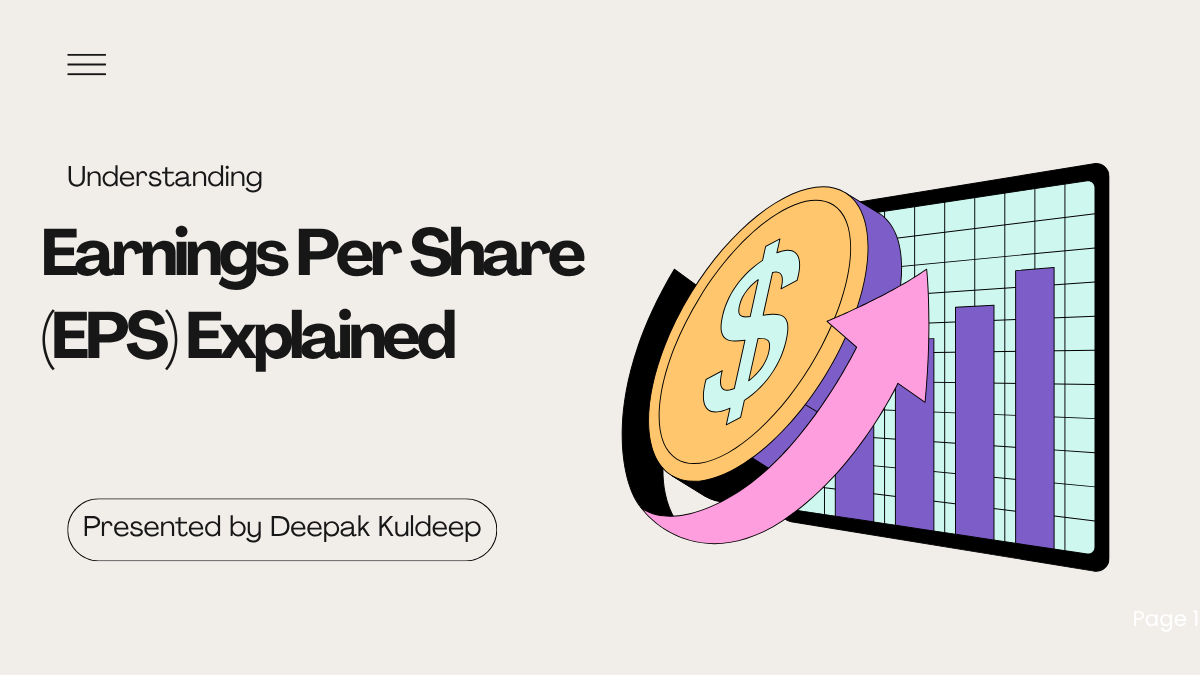
Earnings Per Share (EPS) Explained
Earnings per share divides a company's total profit by its shares outstanding, turning company-wide net income into a per-share figure investors can actually compare.
By Tamanna Shaikh · July 16, 2026

Dividend Investing Strategy Explained
A dividend investing strategy targets companies that pay reliable, often growing cash distributions to shareholders, favoring steady income over speculative price gains.
By Tamanna Shaikh · July 16, 2026
Blue-Chip Stocks Explained
Blue-chip stocks are shares in large, financially sound companies with long histories of reliable performance — the closest thing the stock market has to a household name.
By Allen Krewzz · July 16, 2026
Price-to-Book (P/B) Ratio Explained
The price-to-book ratio compares a stock's market price to its accounting book value per share, a metric long favored by value investors for spotting potential bargains.
By Deepak Kuldeep · July 16, 2026
Preferred Stock: Definition and How It Works
Preferred stock is a hybrid security that pays a fixed dividend and sits ahead of common shares in the payout line, trading voting power for more predictable income.
By Tamanna Shaikh · July 16, 2026
NYSE Explained: How the New York Stock Exchange Works
The New York Stock Exchange is the world's largest exchange by market value of listed companies, blending electronic matching with human floor-based oversight.
By Allen Krewzz · July 16, 2026

How Much Money Do You Need to Start Investing in Stocks?
There's no minimum dollar amount required to start investing in stocks — what matters far more is starting consistently, even with small amounts.
By Deepak Kuldeep · July 16, 2026

Growth Investing Strategy Explained
A growth investing strategy targets companies expected to expand revenue and earnings faster than average, accepting a higher price today for a bigger future payoff.
By Tamanna Shaikh · July 16, 2026
Dividend Stocks Explained
Dividend stocks pay shareholders a portion of company profits on a regular schedule, turning stock ownership into a source of recurring income rather than just a bet on the share price.
By Tamanna Shaikh · July 16, 2026
Candlestick Charts Explained
A candlestick compresses a stock's open, high, low, and close into one visual shape — here's how to read them and which patterns actually get cited most.
By Deepak Kuldeep · July 16, 2026
Value Stocks Explained
Value stocks trade for less than their fundamentals suggest they're worth, and buying them cheap while waiting for the market to catch up is one of the oldest strategies in investing.
By Allen Krewzz · July 16, 2026

Value Investing Strategy Explained
A value investing strategy looks for solid companies trading for less than they're actually worth, buying with a margin of safety rather than chasing whatever's hot.
By Deepak Kuldeep · July 16, 2026
Technical Analysis Explained
Technical analysis studies price and volume patterns to gauge where a stock might head next — a widely used but genuinely contested approach to reading markets.
By Deepak Kuldeep · July 16, 2026
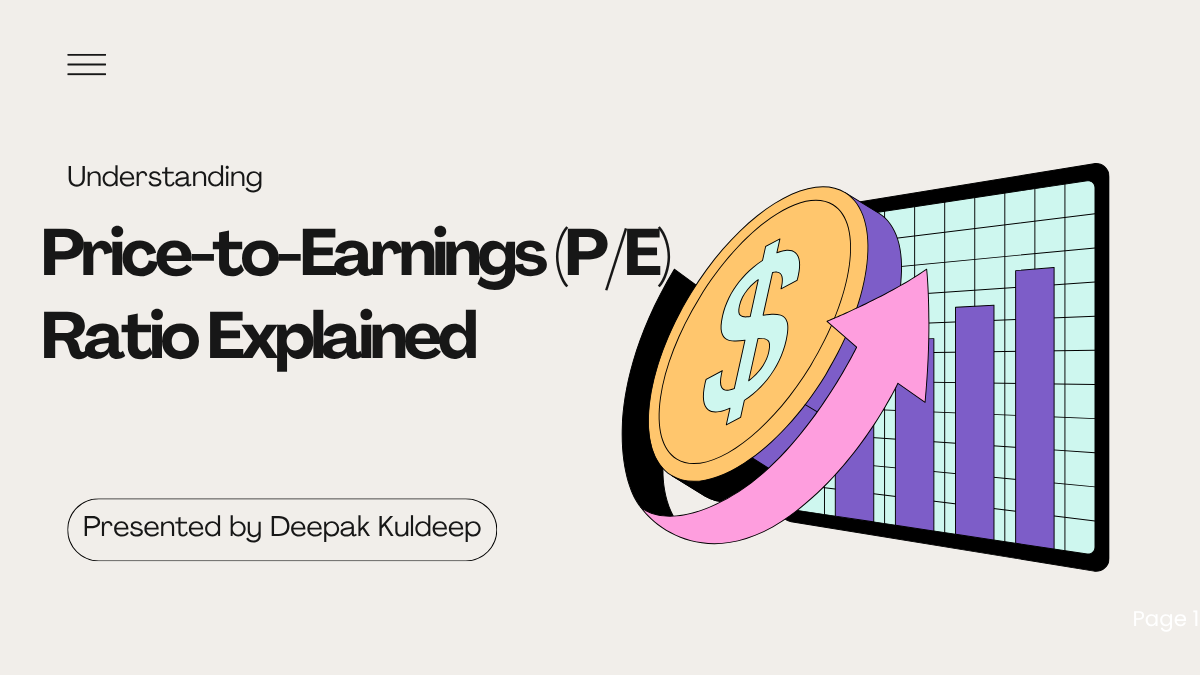
Price-to-Earnings (P/E) Ratio Explained
The P/E ratio divides a stock's share price by its earnings per share, giving a rough sense of how much investors are paying for each dollar of profit.
By Allen Krewzz · July 16, 2026

Opening a Brokerage Account: Step-by-Step Guide
Opening a brokerage account is mostly paperwork you can finish in twenty minutes online — the real decisions are which broker and which account type.
By Deepak Kuldeep · July 16, 2026
How Stock Exchanges Work
A stock exchange is a regulated marketplace that matches buy and sell orders according to fixed rules — here's what happens between clicking "buy" and owning a share.
By Tamanna Shaikh · July 16, 2026
Common Stock: Definition and How It Works
Common stock is the standard form of company ownership most investors buy — it carries voting rights but ranks behind other claims when profits or assets are distributed.
By Tamanna Shaikh · July 16, 2026

What Is the Stock Market?
The stock market is the network of exchanges and rules through which investors buy and sell ownership stakes in public companies — here's what that means in practice.
By Allen Krewzz · July 16, 2026
What Is a Stock?
A stock is a unit of ownership in a company. Buy one and you legally own a sliver of that business, along with a claim on its future profits.
By Allen Krewzz · July 16, 2026
How to Sell Stocks
Selling a stock is a two-click process on most platforms, but knowing when and why to sell is where investors actually struggle.
By Deepak Kuldeep · July 16, 2026
Growth Stocks Explained
Growth stocks are shares in companies expected to expand revenue and earnings faster than the broader market — and that promise of future profit is exactly what makes them exciting and risky at once.
By Deepak Kuldeep · July 16, 2026
Fundamental Analysis Explained
Fundamental analysis means judging a stock by the health of the business behind it — earnings, debt, and valuation — rather than by its price chart.
By Deepak Kuldeep · July 16, 2026
Enterprise Value Explained
Enterprise value is what it would actually cost to buy an entire company, debt included and cash subtracted — a more honest price tag than market cap alone.
By Deepak Kuldeep · July 16, 2026

Buy and Hold Strategy Explained
The buy and hold strategy is about buying solid businesses and resisting the urge to trade around every market wobble, letting compounding do the heavy lifting over years.
By Deepak Kuldeep · July 16, 2026

How to Build a Stock Portfolio
Building a stock portfolio is less about picking winners and more about structure — how many positions you hold, how they're sized, and how diversified they are.
By Deepak Kuldeep · July 4, 2026

Common Stock Investing Mistakes
Most investing losses don't come from picking a bad stock — they come from a handful of predictable behavioral mistakes that are entirely avoidable once you recognize them.
By Tamanna Shaikh · July 4, 2026
High-Risk vs. Low-Risk Stocks: How to Build a Balanced Portfolio
Stock risk isn't just a feeling — it can be measured through volatility, company size, debt levels, and business maturity, all of which help you build a portfolio matched to your comfort level.
By Allen Krewzz · July 4, 2026
Best Long-Term Stocks
The 'best' long-term stocks share common traits — durable competitive advantages, consistent profitability, and manageable debt — rather than being a fixed list of names.
By Deepak Kuldeep · July 4, 2026

How to Buy Stocks Online
Buying a stock online takes four steps: open a brokerage account, verify your identity, fund the account, and place your order. Here's what each step actually involves.
By Allen Krewzz · July 4, 2026

What Is Market Capitalization?
Market capitalization is simply a company's share price multiplied by its total shares outstanding — a single number that tells you how the market currently values the entire business.
By Deepak Kuldeep · July 4, 2026
How to Analyze a Stock
Analyzing a stock doesn't require a finance degree — it requires asking the same handful of questions about every company you consider before you buy.
By Allen Krewzz · July 4, 2026
Dividend Stocks for Passive Income
Dividend stocks pay you a portion of company profits simply for holding shares. Here's how the payments actually work and how to judge whether a dividend is sustainable.
By Allen Krewzz · July 4, 2026
Growth Stocks vs Value Stocks
Growth and value are two different philosophies for picking stocks — one bets on future expansion, the other on being underpriced today. Most solid portfolios include both.
By Tamanna Shaikh · July 4, 2026

Best Stocks for Beginners
There's no fixed list of 'best' stocks for beginners — there are characteristics that make a stock easier to hold with confidence while you're still learning.
By Allen Krewzz · July 4, 2026
How to Start Investing in Stocks
Getting started in the stock market comes down to five concrete steps: setting a goal, picking an account, funding it, choosing your first investments, and staying consistent.
By Allen Krewzz · July 4, 2026

Diversification: Why You Shouldn't Put All Your Eggs in One Basket
Diversification spreads your money across enough different investments that no single company's bad news can meaningfully sink your portfolio.
By Deepak Kuldeep · June 29, 2026

Dollar Cost Averaging Explained
Dollar-cost averaging means investing the same amount on a fixed schedule regardless of price, which trades the chance of perfect timing for consistency and lower stress.
By Tamanna Shaikh · June 28, 2026
Popular Companies
Popular Indexes
Stock Lists
Stock Tools
Frequently Asked Questions
View all 365 FAQs →Stay Ahead of the Markets
Get stock analysis and market moves in your inbox.