GDP is the single most-cited measure of economic size and growth — understanding what it actually captures, and what it doesn't, matters for reading any headline correctly.
The Definition and Current Data
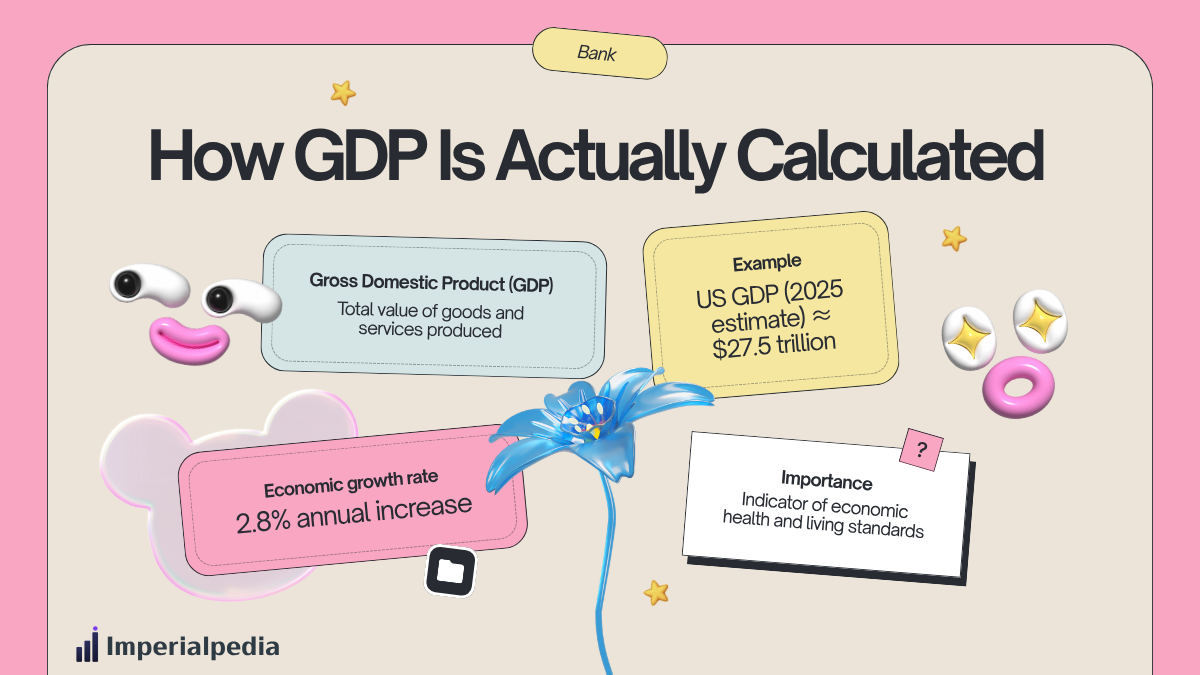
Gross Domestic Product measures the total value of all goods and services produced within a country over a specific period. The most recent data: Q2 2026 GDP grew at an annualized 1.5%, down from 2.1% in Q1 — the BEA's breakdown showed strength in consumer spending, investment, and exports, partly offset by a decrease in government spending, with net trade subtracting a full 1.0 percentage point. The BEA (Bureau of Economic Analysis) publishes this data quarterly, with an advance estimate followed by two subsequent revisions as more complete data becomes available.
The "advance estimate" released first is based on incomplete data and gets revised twice more in subsequent months — a meaningful gap between the initial advance estimate and the final revised figure is common enough that treating the first headline number as provisional, not final, is a useful habit.
Someone Reading a Fresh GDP Headline: Recognize it's a provisional advance estimate — later revisions may shift the number.
Someone New to Following GDP Data: Start with the quarterly release cadence and the advance-estimate-then-revision pattern.
Follow GDP the Way
- Treat the advance estimate as provisional, not final.
- Check the component breakdown, not just the headline percentage.
- Compare against the prior quarter for trend.
See how GDP is calculated and nominal vs. real GDP for the deeper mechanics.