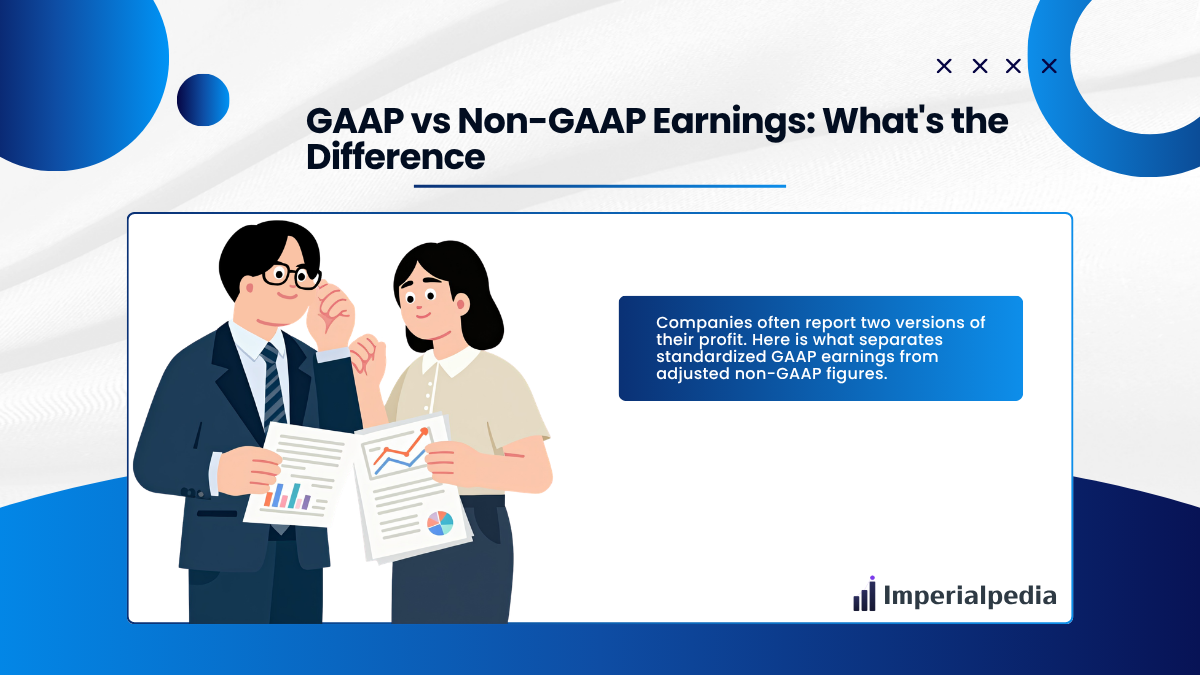
Companies often report two different earnings figures for the same quarter — and the gap between them can be meaningful, not just a rounding difference.
The Distinction
GAAP (Generally Accepted Accounting Principles) earnings follow standardized rules the SEC requires — a consistent basis for comparing companies. Non-GAAP (adjusted) earnings exclude specific items management deems non-recurring or non-operational — stock-based compensation, restructuring charges, one-time legal settlements, acquisition costs. Companies must reconcile the two in every disclosure, but non-GAAP figures are frequently the ones emphasized in press release headlines, since they're often the higher and more flattering number.
One thing worth checking: Watch specifically for stock-based compensation being excluded from non-GAAP figures — it's a genuine expense (diluting existing shareholders even though it isn't a cash outlay), and a company consistently excluding a large, persistent stock-based compensation charge from its "adjusted" earnings is presenting a meaningfully rosier picture than GAAP reflects.
Someone Comparing a Company's Adjusted vs. GAAP Earnings: Check specifically what's being excluded — stock-based compensation is a common and meaningful adjustment worth scrutinizing.
Someone Comparing Companies Across an Industry: Use GAAP figures for the most consistent, standardized basis of comparison.
Read GAAP and Non-GAAP the Way
- Check the reconciliation between GAAP and non-GAAP figures every quarter.
- Watch for stock-based compensation being excluded from adjusted numbers.
- Use GAAP for cross-company comparisons given its standardization.
See revenue vs. earnings explained for the underlying figures these adjustments apply to.