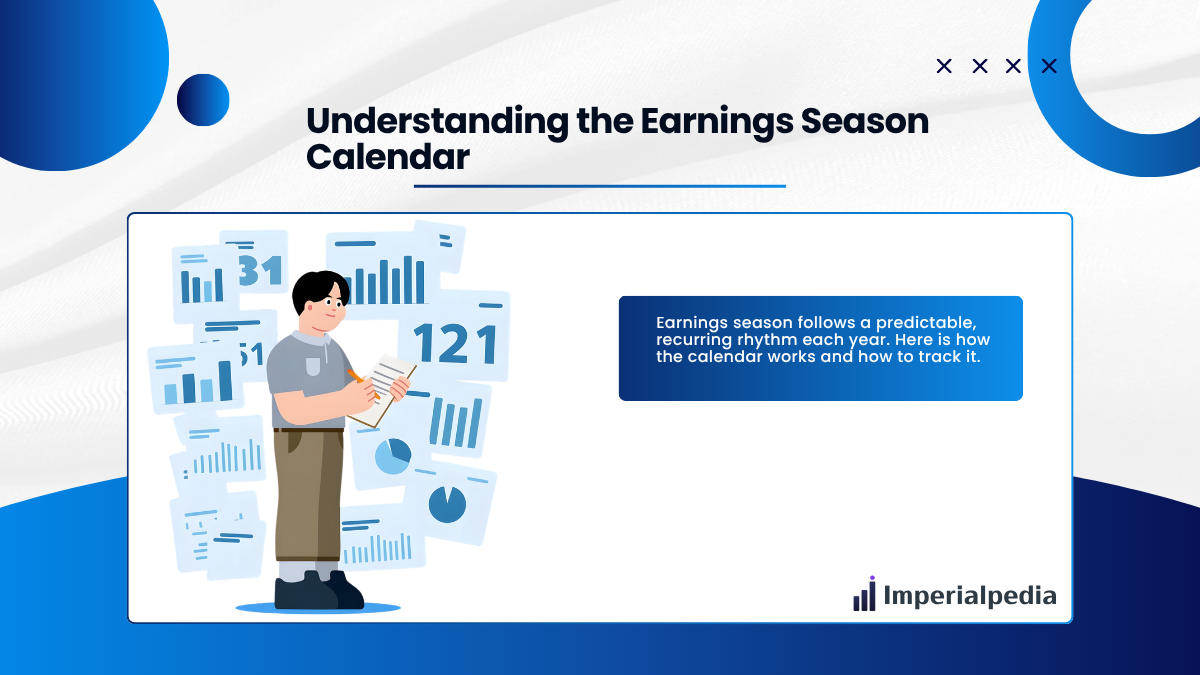
Earnings season follows a predictable rhythm tied directly to the calendar quarter — not random scattered announcements, but a genuine recurring window four times a year.
The Calendar
For calendar-year companies, earnings season begins roughly two weeks after each quarter ends — mid-January, April, July, and October — and runs for about six weeks. Larger companies with faster SEC filing deadlines (40 days for large accelerated filers) typically report earlier in each window; smaller companies (45-day deadline) often report later. Major banks traditionally kick off each season first, given their faster internal reporting cycles.
A nuance worth flagging: Broader market volatility tends to rise during peak earnings season weeks, since a concentrated cluster of major companies reporting simultaneously means more market-moving surprises landing in a compressed timeframe — a useful seasonal pattern to anticipate rather than be caught off guard by.
Someone Trading Around a Specific Company's Report: Check the historical reporting pattern (early or late in the season window) for that specific company.
Someone Managing Portfolio Risk During Earnings Season: Expect elevated volatility during peak weeks, and size positions accordingly.
Track Earnings Season the Way
- Anticipate the recurring mid-Jan/Apr/Jul/Oct start windows.
- Check whether your specific holdings typically report early or late in the window.
- Expect elevated volatility during peak reporting weeks.
See how to trade around earnings for the fuller risk-management approach.