Linda Zhao
- Title:
- Fact-Checking Editor
- Expertise:
- CFA Analysis, Brokerage Fees, Investment Products
- Has published 100 articles for Imperialpedia.
- Covers CFA Analysis, Brokerage Fees, Investment Products for Imperialpedia.
- CFA Charterholder
Experience
Linda Zhao is a CFA charterholder who fact-checks Imperialpedia's investing and brokerage reviews, verifying fee schedules, account minimums, and performance claims against each provider's own disclosures.
About Imperialpedia
Imperialpedia helps readers understand personal finance, investing, and markets. Every published article names a writer, an editorial reviewer, and a fact-checker, and claims are checked against primary sources before publication. Learn more in our editorial policy and fact-checking policy.
Full Archive
Latest From Linda
100 articles
Circuit breakers are automatic trading halts triggered by steep, fast market declines — a safeguard designed to give investors a pause and curb panic-driven selling.
By James Chen
U.S. stock markets run on a set daily schedule, with regular trading hours, extended pre-market and after-hours sessions, and meaningfully different liquidity and risk in each.
By James Chen
Dividend yield measures a stock's annual dividend payment as a percentage of its share price — a quick income comparison tool that can also hide risk when a yield looks unusually high.
By James Chen
Trading volume — the number of shares changing hands — helps confirm or question a price move. Combined with price action, volume analysis is one of the core tools of technical analysis.
By James Chen
Beta measures how much a stock's price tends to move relative to the overall market — a widely used, if imperfect, gauge of relative volatility and risk.
By James Chen
Return on assets measures how efficiently a company turns what it owns into profit — net income divided by total assets — and is most useful when compared within the same industry.
By James Chen
Treasury shares are stock a company has repurchased and holds itself rather than keeping in public circulation — reducing outstanding shares without retiring them entirely.
By James Chen
A company's float is the portion of its outstanding shares actually available for public trading — excluding insider holdings, restricted stock, and shares the company itself owns.
By James Chen
International stocks are shares in companies based outside your home country — a way to diversify beyond a single economy, with added considerations like currency risk and differing market regulations.
By James Chen
Large-cap stocks are shares in companies typically worth $10 billion or more — established, heavily-traded businesses that anchor most major indexes and most diversified portfolios.
By James Chen
Mid-cap stocks — roughly $2 billion to $10 billion in market value — sit between small and large caps, often described as a middle ground between growth potential and financial stability.
By James Chen
Small-cap stocks are shares in companies typically worth $300 million to $2 billion — smaller, less-followed businesses that offer higher growth potential alongside meaningfully higher risk and volatility.
By James Chen
Risk management in stock investing isn't about eliminating losses — it's a set of practical habits that keep any single mistake from derailing your overall plan.
By James Chen
Outstanding shares are all the shares a company has issued and that are currently held by shareholders, including insiders — the figure used to calculate market capitalization and earnings per share.
By James Chen

A contrarian investing strategy deliberately buys stocks the crowd has given up on and sells or avoids whatever everyone else is currently excited about.
By James Chen
Bollinger Bands wrap a moving average in two bands that widen and narrow with volatility, giving a visual read on how stretched a price move has become.
By James Chen
An order book is the live, constantly updating list of pending buy and sell orders for a stock, organized by price — it's the raw data behind every quote you see.
By James Chen
A shareholder is any individual or institution that owns at least one share of a company's stock, giving them a legal claim on its earnings and, often, a vote.
By James Chen
Return on equity measures how efficiently a company turns shareholders' invested capital into profit, calculated by dividing net income by shareholders' equity.
By James Chen
Portfolio allocation is the decision that matters more than any individual stock pick — how you split money across stocks, bonds, and cash based on your timeline and risk tolerance.
By James Chen
MACD tracks the changing distance between two moving averages to gauge momentum shifts — one of the most widely used indicators in technical analysis.
By James Chen
Defensive stocks belong to companies selling things people need regardless of the economy — utilities, groceries, medicine — which makes their earnings unusually steady through recessions.
By James Chen
Active investing means researching and selecting individual securities in an ongoing attempt to outperform the broader market rather than simply match it.
By James Chen
Owning common stock typically grants voting rights on major corporate decisions, exercised at annual meetings or through mailed and electronic proxy ballots.
By James Chen
The Relative Strength Index gauges how fast and how far a stock has moved recently, flagging conditions traders commonly call overbought or oversold.
By James Chen
Passive investing means minimizing decisions and trading, leaning on broad, low-cost funds to capture market returns instead of trying to outguess where prices go next.
By James Chen
Free cash flow is the actual cash a company generates after running the business and paying for equipment and property — money genuinely free to return to shareholders or reinvest.
By James Chen
Cyclical stocks rise and fall alongside the broader economy — thriving when consumers and businesses are spending freely, and struggling when they pull back.
By James Chen
The bid is the highest price a buyer will pay, the ask is the lowest price a seller will accept, and the gap between them — the spread — quietly affects every trade.
By James Chen
Every stock price move ultimately traces back to supply and demand — how many shares are available to trade against how eager buyers and sellers are to trade them.
By James Chen
Public companies sell shares to anyone through a stock exchange and must disclose detailed financials; private companies keep ownership closely held and their books largely confidential.
By James Chen
Net income is what remains of a company's revenue after every expense, interest payment, and tax bill is subtracted — the figure investors call the 'bottom line.'
By James Chen
A moving average smooths daily price noise into a single trend line, and its crossovers are among the most widely watched signals in technical analysis.
By James Chen
Meme stocks surge and crash based on social media attention and coordinated retail trading rather than business fundamentals — the GameStop rally of 2021 turned the phenomenon into a household term.
By James Chen
An index investing strategy means buying a fund that simply tracks a market benchmark, owning hundreds of companies at once instead of trying to pick individual winners.
By James Chen

A trend line connects a stock's swing highs or lows to visualize direction — simple to draw, easy to draw badly, and never a guarantee of what comes next.
By James Chen
A stock certificate is a paper document proving share ownership. Almost all modern trading skips paper entirely, using electronic book-entry records instead.
By James Chen
Revenue is the total amount of money a company brings in from selling its products or services, before any expenses are subtracted — the starting line of the income statement.
By James Chen
Penny stocks trade at very low share prices, often outside major exchanges, and combine thin regulation with heavy manipulation risk — a low price tag doesn't mean low risk.
By James Chen

A momentum investing strategy buys stocks that are already trending upward and sells those trending downward, betting that recent price direction tends to persist for a while.
By James Chen
Long-term investing isn't a passive default — it's a deliberate strategy that lets compounding and business growth do the work that timing rarely can.
By James Chen
Stock prices change because buyers and sellers continuously renegotiate a price based on new information, expectations, and how badly each side wants to trade.
By James Chen
Support and resistance are price levels where a stock has repeatedly stalled or reversed — useful reference points, though far from guaranteed to hold.
By James Chen
Nasdaq was the world's first fully electronic stock exchange, and it still runs on a competing-market-maker model rather than a physical trading floor.
By James Chen
Fractional shares let you invest a specific dollar amount in a stock rather than buying a full share, opening up expensive companies to investors with modest budgets.
By James Chen

Buying your first stock is a small number of clicks, but a little preparation beforehand makes the experience far less nerve-wracking.
By James Chen
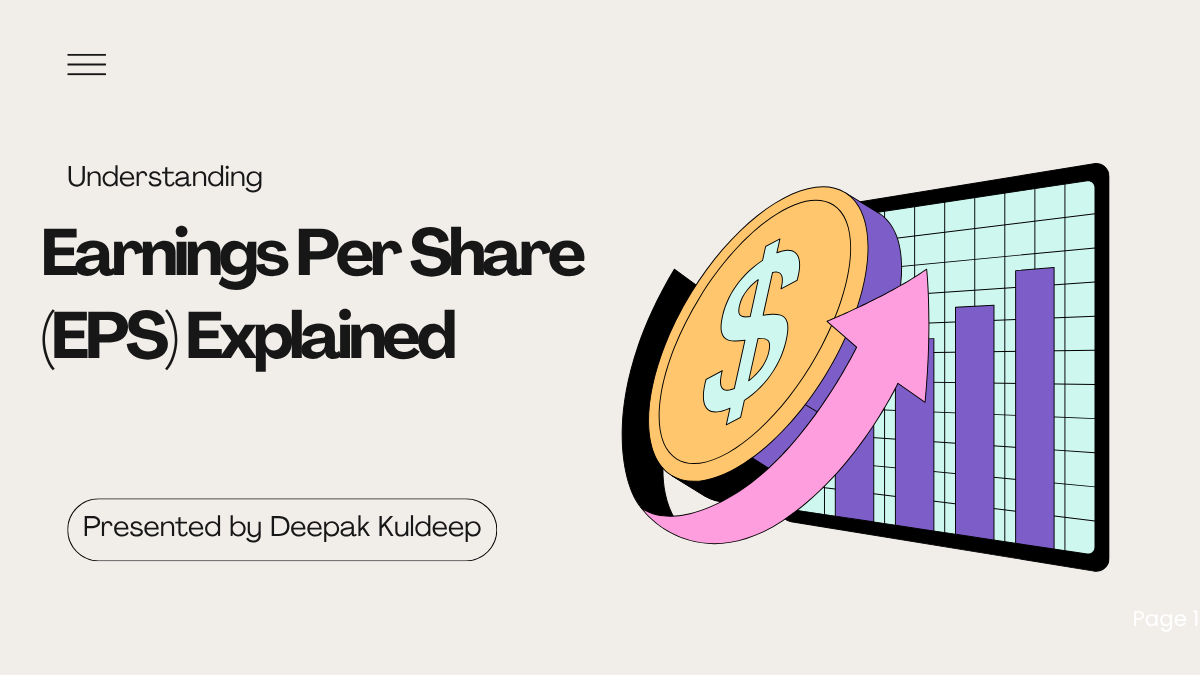
Earnings per share divides a company's total profit by its shares outstanding, turning company-wide net income into a per-share figure investors can actually compare.
By James Chen
A dividend investing strategy targets companies that pay reliable, often growing cash distributions to shareholders, favoring steady income over speculative price gains.
By James Chen
Blue-chip stocks are shares in large, financially sound companies with long histories of reliable performance — the closest thing the stock market has to a household name.
By James Chen
The price-to-book ratio compares a stock's market price to its accounting book value per share, a metric long favored by value investors for spotting potential bargains.
By James Chen
Preferred stock is a hybrid security that pays a fixed dividend and sits ahead of common shares in the payout line, trading voting power for more predictable income.
By James Chen
The New York Stock Exchange is the world's largest exchange by market value of listed companies, blending electronic matching with human floor-based oversight.
By James Chen

There's no minimum dollar amount required to start investing in stocks — what matters far more is starting consistently, even with small amounts.
By James Chen
A growth investing strategy targets companies expected to expand revenue and earnings faster than average, accepting a higher price today for a bigger future payoff.
By James Chen
Dividend stocks pay shareholders a portion of company profits on a regular schedule, turning stock ownership into a source of recurring income rather than just a bet on the share price.
By James Chen
A candlestick compresses a stock's open, high, low, and close into one visual shape — here's how to read them and which patterns actually get cited most.
By James Chen
Value stocks trade for less than their fundamentals suggest they're worth, and buying them cheap while waiting for the market to catch up is one of the oldest strategies in investing.
By James Chen
A value investing strategy looks for solid companies trading for less than they're actually worth, buying with a margin of safety rather than chasing whatever's hot.
By James Chen
Technical analysis studies price and volume patterns to gauge where a stock might head next — a widely used but genuinely contested approach to reading markets.
By James Chen
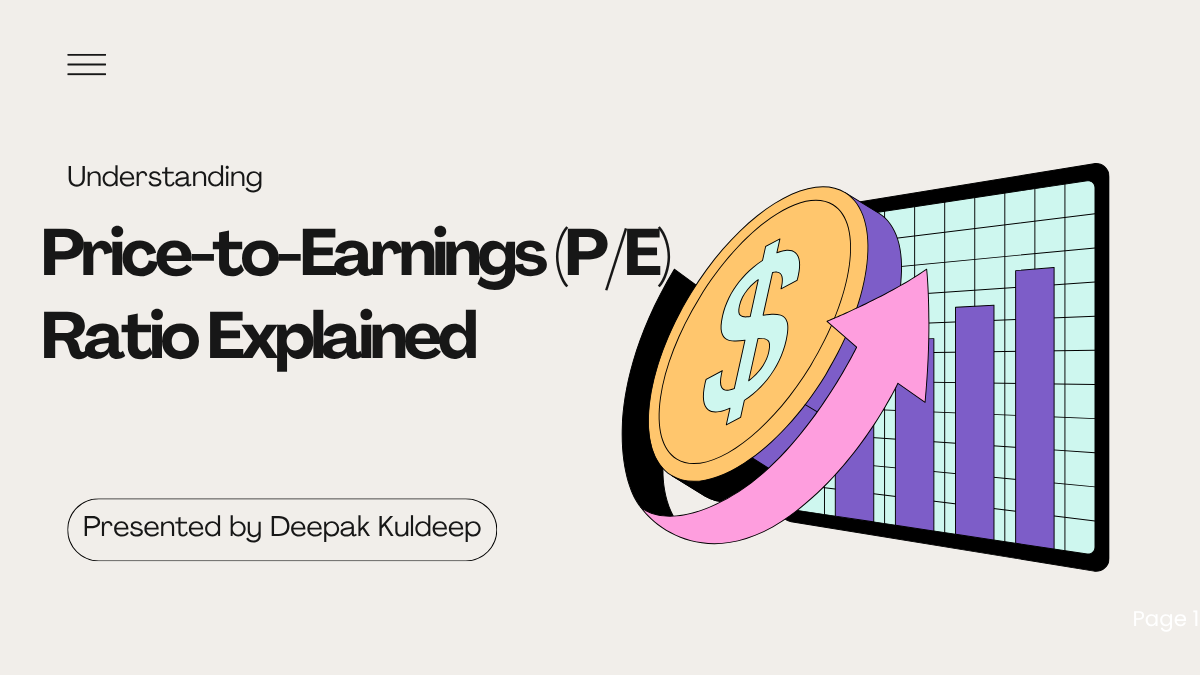
The P/E ratio divides a stock's share price by its earnings per share, giving a rough sense of how much investors are paying for each dollar of profit.
By James Chen
Opening a brokerage account is mostly paperwork you can finish in twenty minutes online — the real decisions are which broker and which account type.
By James Chen
A stock exchange is a regulated marketplace that matches buy and sell orders according to fixed rules — here's what happens between clicking "buy" and owning a share.
By James Chen
Common stock is the standard form of company ownership most investors buy — it carries voting rights but ranks behind other claims when profits or assets are distributed.
By James Chen
The stock market is the network of exchanges and rules through which investors buy and sell ownership stakes in public companies — here's what that means in practice.
By James Chen
A stock is a unit of ownership in a company. Buy one and you legally own a sliver of that business, along with a claim on its future profits.
By James Chen
Selling a stock is a two-click process on most platforms, but knowing when and why to sell is where investors actually struggle.
By James Chen
Growth stocks are shares in companies expected to expand revenue and earnings faster than the broader market — and that promise of future profit is exactly what makes them exciting and risky at once.
By James Chen
Fundamental analysis means judging a stock by the health of the business behind it — earnings, debt, and valuation — rather than by its price chart.
By James Chen
Enterprise value is what it would actually cost to buy an entire company, debt included and cash subtracted — a more honest price tag than market cap alone.
By James Chen

The buy and hold strategy is about buying solid businesses and resisting the urge to trade around every market wobble, letting compounding do the heavy lifting over years.
By James Chen
Most tax filing problems come from a handful of avoidable mistakes. Here is what to watch for before you submit.
By Samantha Silberstein
Tax software handles well-defined situations well. A CPA earns their fee when your situation gets genuinely complex. Here is how to tell which you need.
By Samantha Silberstein
Free tax filing is real, but eligibility and coverage vary. Here is how the main free options work.
By Samantha Silberstein
Self-employment income adds real complexity to a tax return. Here is what to look for in software built to handle it.
By Samantha Silberstein
A simple tax return usually qualifies for free filing — here is how to confirm your situation actually fits, and what to check before you start.
By Samantha Silberstein
Choosing tax software comes down to a handful of factors: your tax situation, what the free tier actually covers, and how much support you need. Here is how to evaluate your options.
By Samantha Silberstein
A paid finance app isn’t automatically better than a free one. Here is how to decide which makes sense for you.
By Julius Mansa

Before connecting your bank account to any app, run through this security checklist first.
By Julius Mansa
Net worth tracking apps aggregate your entire financial picture. Here is what to check before linking everything to one dashboard.
By Julius Mansa
Beginner investing apps vary widely in fees, complexity, and support. Here is what actually matters when starting out.
By Julius Mansa

A good budgeting app should make tracking spending effortless. Here is what to evaluate before you commit to one.
By Julius Mansa
Before you link your bank account to any app, here is the framework we use to evaluate whether a personal finance app is trustworthy and worth using.
By Julius Mansa

An origination fee can quietly reduce how much loan money actually reaches you. Here is how these fees work and how to factor them in.
By Cierra Murry

Comparing loan offers is easier with a consistent method. Here is a step-by-step approach to evaluating multiple offers fairly.
By Cierra Murry

Online lenders and banks both offer personal loans, but the experience — and sometimes the terms — can differ significantly.
By Cierra Murry

Fair credit does not mean no options. Here is what to expect and how to compare personal loan offers when your score is in the middle range.
By Cierra Murry

A debt consolidation loan only helps if the math works in your favor. Here is what to check before you combine your debts into one loan.
By Cierra Murry

Comparing personal loans means looking past the advertised rate. Here is the framework we use to evaluate any lender or offer.
By Cierra Murry

Geopolitical events can move markets quickly. Here is how they transmit into stock prices, currencies, and commodities.
By Dara-Abasi Ita

A handful of economic indicators do most of the heavy lifting in understanding global economic conditions. Here is what to watch and why.
By Dara-Abasi Ita

Emerging markets offer growth potential alongside higher risk. Here are the basics every investor should understand before allocating capital.
By Dara-Abasi Ita

Currency values shift constantly. Here is what determines exchange rates and why they matter for international investing.
By Dara-Abasi Ita

International trade is one of the strongest links between economies. Here is how shifts in trade flow through to financial markets.
By Dara-Abasi Ita

The global economy links every national market through trade, capital flows, and shared institutions. This guide explains how it all fits together and why it matters to your portfolio.
By Dara-Abasi Ita

A budgeting calculator helps turn your income into a concrete spending and savings plan. Here is how to use one effectively.
By Chip Stapleton
A mortgage calculator estimates your monthly payment and total cost. Here is how to use one and what factors beyond the rate matter.
By Chip Stapleton

A loan payment calculator shows what a loan will actually cost you. Here is how the calculation works and what inputs matter.
By Chip Stapleton

A retirement calculator estimates whether your current savings rate is on track. Here is how to use one and interpret the results.
By Chip Stapleton

Compound interest calculators project how savings or investments grow over time. Here is how they work and what the inputs mean.
By Chip Stapleton

Financial calculators remove guesswork from compounding and amortization math. Here is how to use them well — and where their assumptions matter.
By Chip Stapleton