Modi Calls for End to Ukraine War as India Faces Pressure Over Russian Oil
Indian Prime Minister Narendra Modi has urged an end to the Ukraine conflict during talks with Russian President Vladimir Putin, as India's dependence on Russian crude faces growing pressure from proposed U.S. trade measures.

<strong>BISHKEK, Kyrgyzstan — September 1, 2026</strong>
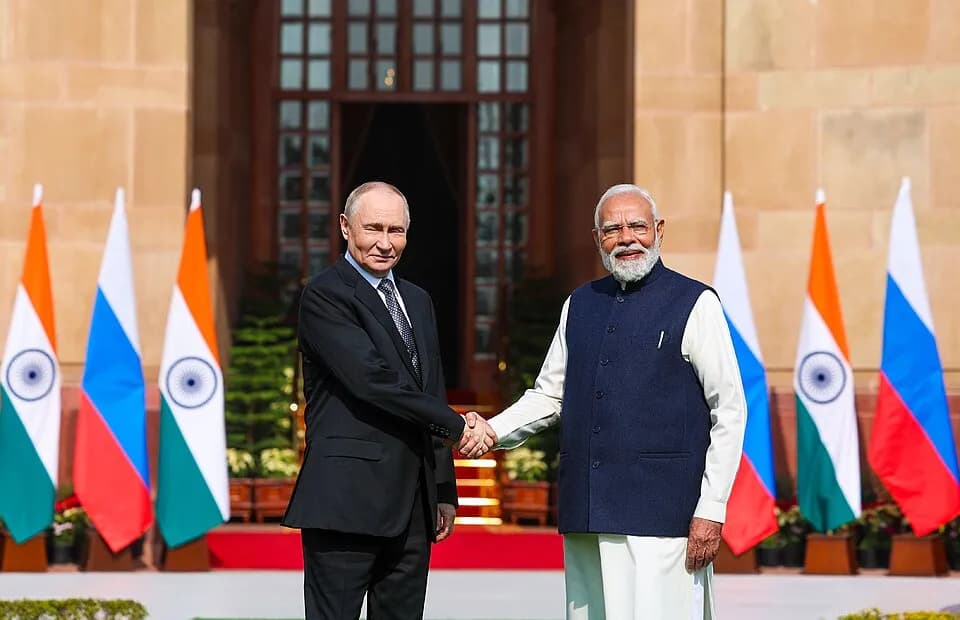
Indian Prime Minister Narendra Modi has urged Russian President Vladimir Putin to move toward ending the war in Ukraine, highlighting India's continued push for dialogue at a time when its close energy relationship with Russia is facing increasing pressure from the United States.
The two leaders met in Bishkek on the sidelines of the Shanghai Cooperation Organisation summit on August 31.
Modi reiterated India's support for efforts aimed at achieving peace and called for an end to the hostilities.
The meeting comes as India attempts to maintain its longstanding strategic relationship with Moscow while also managing increasingly complicated economic and diplomatic relations with Washington.
India walks a difficult diplomatic line
India has maintained close ties with Russia for decades, including extensive cooperation in energy, defence and trade.
Since the start of Russia's full-scale invasion of Ukraine, however, energy has become an especially important part of the relationship.
Russian crude has become a major component of India's oil-import strategy, helping Indian refiners secure supplies at competitive prices while global energy markets face continuing uncertainty.
That dependence has also made India's relationship with Moscow a focus of Western policy.
U.S. pressure over Russian energy
The diplomatic stakes have increased as U.S. lawmakers consider tougher measures targeting countries that continue to purchase Russian energy.
A sanctions bill that has passed the U.S. Senate would authorize the president to impose potentially severe tariffs on countries that continue significant purchases of Russian oil and gas.
India and China are among the major buyers that could potentially be affected.
This creates a difficult balancing act for New Delhi: maintaining affordable and reliable energy supplies while avoiding measures that could damage India's relationships with major trading partners.
Russia and India maintain strong economic ties
Energy is only one element of the broader India-Russia relationship.
The two countries continue to cooperate across areas including defence, trade, investment, technology and nuclear energy.
India's Ministry of External Affairs describes the relationship as a longstanding strategic partnership, with both sides continuing to engage on economic and geopolitical issues.
The latest Modi-Putin meeting therefore carries significance beyond the Ukraine conflict.
It demonstrates that India continues to engage directly with Moscow even as it publicly advocates a peaceful resolution to the war.
What Modi's message means
Modi's appeal to Putin does not necessarily indicate a fundamental shift in India's relationship with Russia.
Instead, it reflects India's broader diplomatic approach of maintaining communication with Moscow while supporting efforts toward peace.
Russia remains an important strategic partner for India, while the United States is also a critical economic and geopolitical partner.
New Delhi therefore faces a three-way challenge: protecting its energy interests, preserving strategic autonomy and avoiding unnecessary escalation with Washington.
The road ahead
The next major question will be whether U.S. lawmakers advance the proposed sanctions legislation and how India responds if additional trade measures are introduced.
Source: Reuters